What If Psychological Safety Was a Card Game?
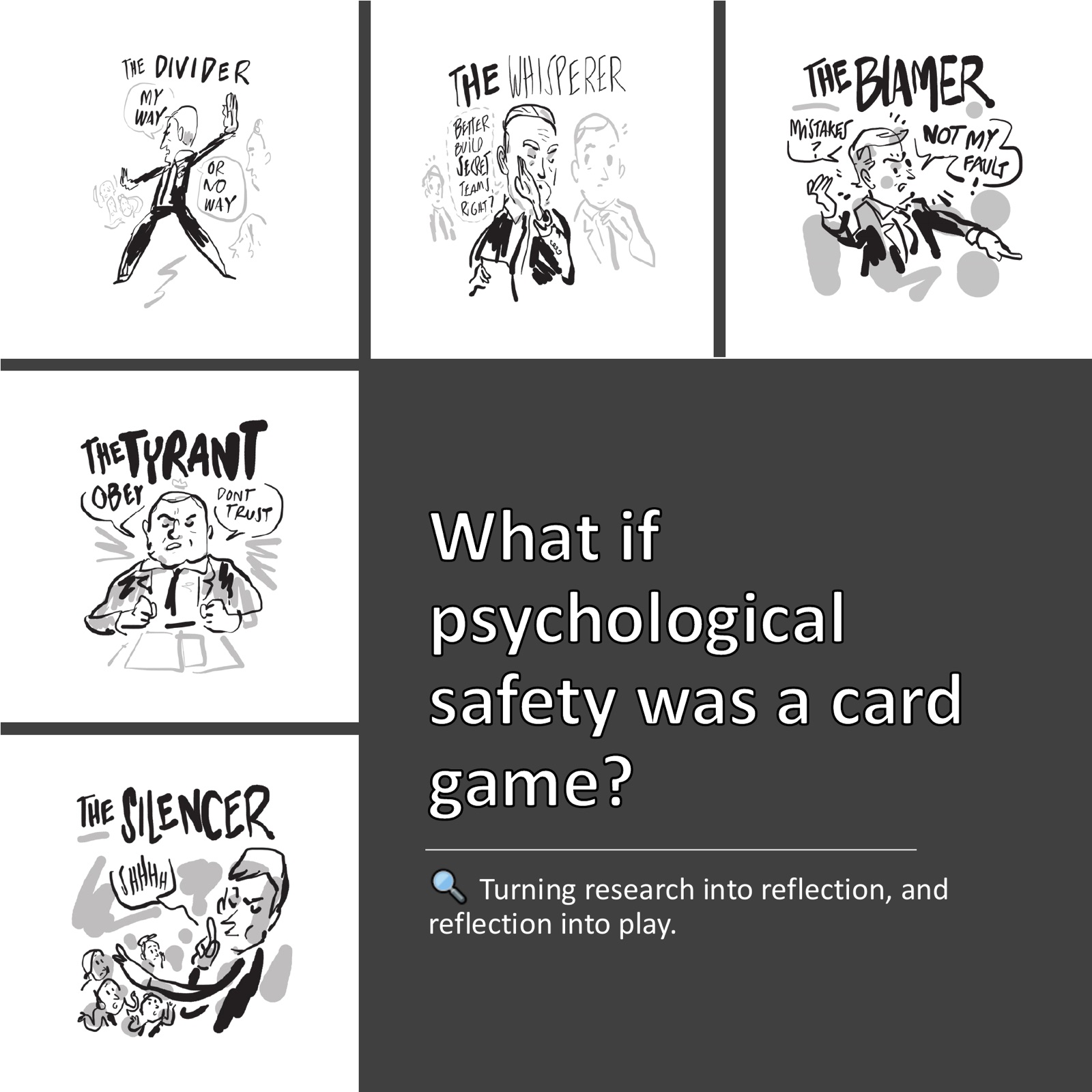
“What if psychological safety was a card game?” That’s the question I threw into the room a few weeks ago. Till Laßmann picked it up — and sketched.
We iterated and developed it further together with Anja Püttgen and Max Barros. We mapped Amy Edmondson’s research to gameplay and designed 5 anti-heroes and 40 behavioral micro-interventions. Now the prototype is ready. It’s practical. Fun. Rooted in science.
We’d love to bring this to life — not just for ourselves, but as a tool for everyone working to make teams safer, braver, more open. We believe in serious play, and that culture is built one conversation — or card — at a time.
How the game works
The game is played with six cards in hand, a face-down draw pile and a face-up discard. Five suits represent five dimensions of psychological safety:
- Embracing mistakes
- Open dialogue & feedback
- Support & trust
- Decision-making & shared ownership
- Belonging & appreciation
Each suit contains 7, 8, 9, 10, Jack, Queen, King and Ace, plus one anti-hero per suit — 45 cards in total. The first player to lay down five cards of one dimension wins. The anti-hero does not count towards it: it is placed face up, read out, and forces a card swap.
The cards follow a clear progression, from individual micro-behaviors to organizational structures:
- 7–10: individual actions
- Jack–King: team dynamics
- Ace: embedded processes and culture
This aligns with Amy Edmondson’s work on psychological safety as a learning condition, and Timothy R. Clark’s Four Stages of Psychological Safety model.
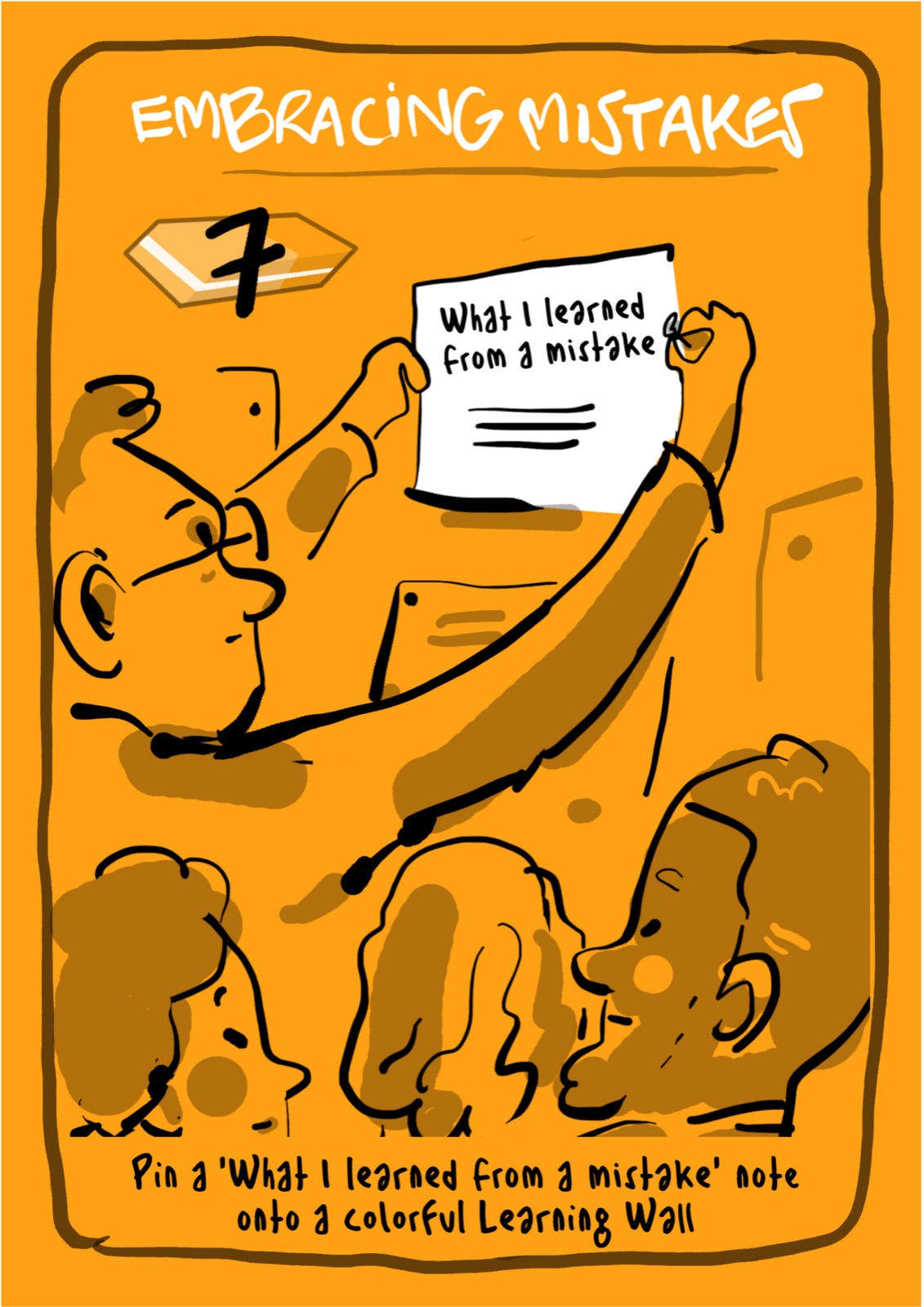
The 7s
Psychological safety starts small. A 7 represents a Single Initiative — one personal action that sparks psychological safety in a team. No big programs. No culture projects. Just small, concrete signals in everyday work:
- Consciously welcoming someone
- Actively seeking different perspectives
- Sharing a mistake you made
- Offering help before being asked
- Making your decisions transparent
These micro-behaviors plant the first seeds.
The 8s
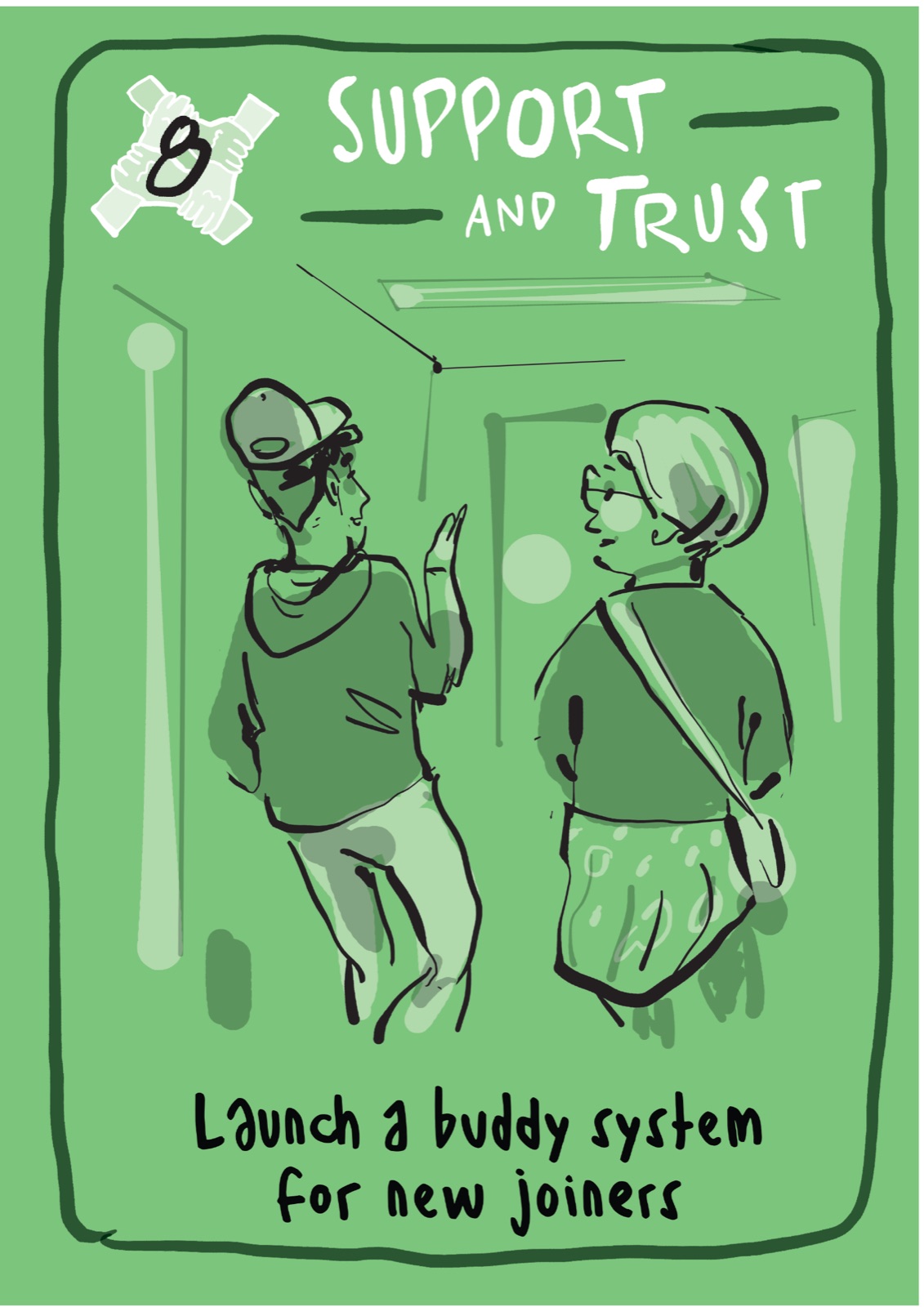
From spark to habit — a single signal fades quickly. An 8 represents Proactive Ownership — a self-driven, repeated contribution to nurturing psychological safety. Not a one-time gesture, but a rhythm you create and sustain. Nobody asked you to do it. You just decided it matters.
The shift from 7 to 8 is subtle but significant: a 7 says “I’ll try this once.” An 8 says “I’m making this mine.”
- Share a personal story of a professional failure during a team check-in — regularly, not just once.
- Set up a “Feedback Friday” where everyone shares quick reflections.
- Launch a buddy system for new joiners.
- Propose a decision retrospective after major milestones.
- Organize a “Gratitude Wall” where people post thank-you notes.
What connects all five: you don’t wait for permission. You don’t need a mandate. You take ownership of a practice that makes the team environment safer — and you keep showing up for it. This is where psychological safety stops being an idea and starts becoming a pattern. As Amy Edmondson notes, psychological safety needs to be actively maintained — not installed once and forgotten. The 8s are exactly that maintenance work, driven by individuals who chose to own it.
The 9s
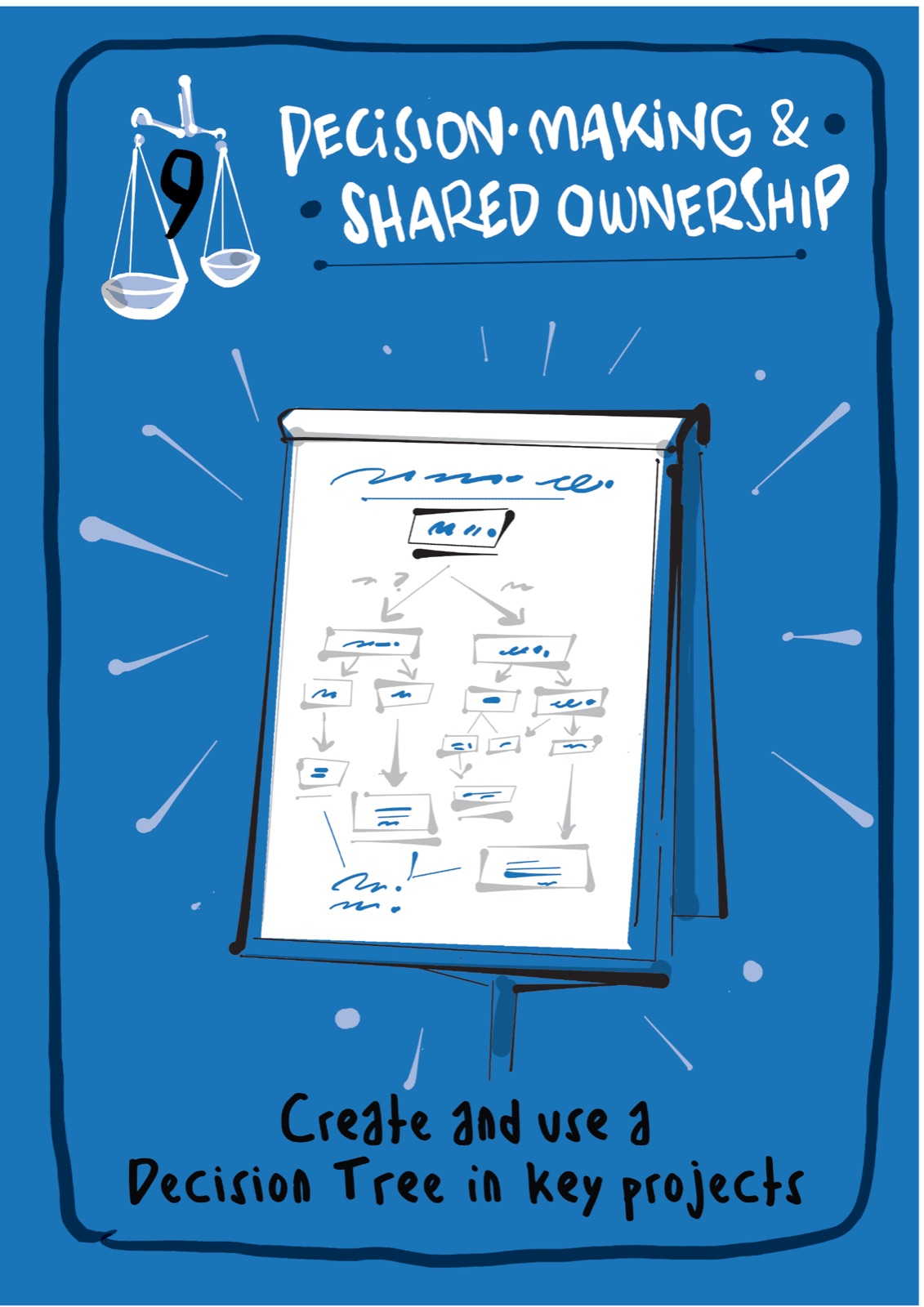
From “my thing” to “our thing” — psychological safety doesn’t scale through individual effort alone. A 9 represents a Contribution to Group — a visible offer to strengthen the group’s collaborative trust and communication. You’re no longer just modeling behavior; you’re designing moments that invite the whole team in.
The shift from 8 to 9? An 8 says “I keep doing this because it matters.” A 9 says “Let’s do this together.”
- Normalize visible mistake sharing by kicking off “Failure of the Month” nominations.
- Host a “Question Storm” session where only questions are allowed.
- Organize a “Support Swap” where teammates pair up to assist each other.
- Create and use a Decision Tree in key projects.
- Set up an anonymous compliment exchange through a “Kindness Box.”
What’s different here: every 9 creates a shared space — a format, a ritual, an invitation that doesn’t depend on you alone anymore. Others step in, not because you told them to, but because the structure makes it easy. This mirrors what Timothy R. Clark describes as the move from Contributor Safety to Challenger Safety: the moment where people don’t just feel safe to contribute, but actively shape how the group works together. And it echoes Edmondson’s insight that psychological safety is fundamentally a group-level phenomenon — not just an individual mindset.
The 10s
From shared space to real conversation — formats alone don’t guarantee that people actually talk to each other openly, honestly, constructively. A 10 represents Dialogue Activation — a deliberate effort to spark open, constructive conversations and idea-sharing. You’re no longer just creating opportunities for exchange; you’re actively facilitating the exchange itself.
The shift from 9 to 10? A 9 says “Let’s do this together.” A 10 says “Let’s actually talk about it.”
- Facilitate a “Failure Story Circle” — where mistakes become shared learning, not private shame.
- Install an “Open Question Wall” that makes curiosity visible and permanent.
- Organize “Support Circles” for emotional check-ins beyond project updates.
- Moderate open decision-making forums where voices carry equal weight.
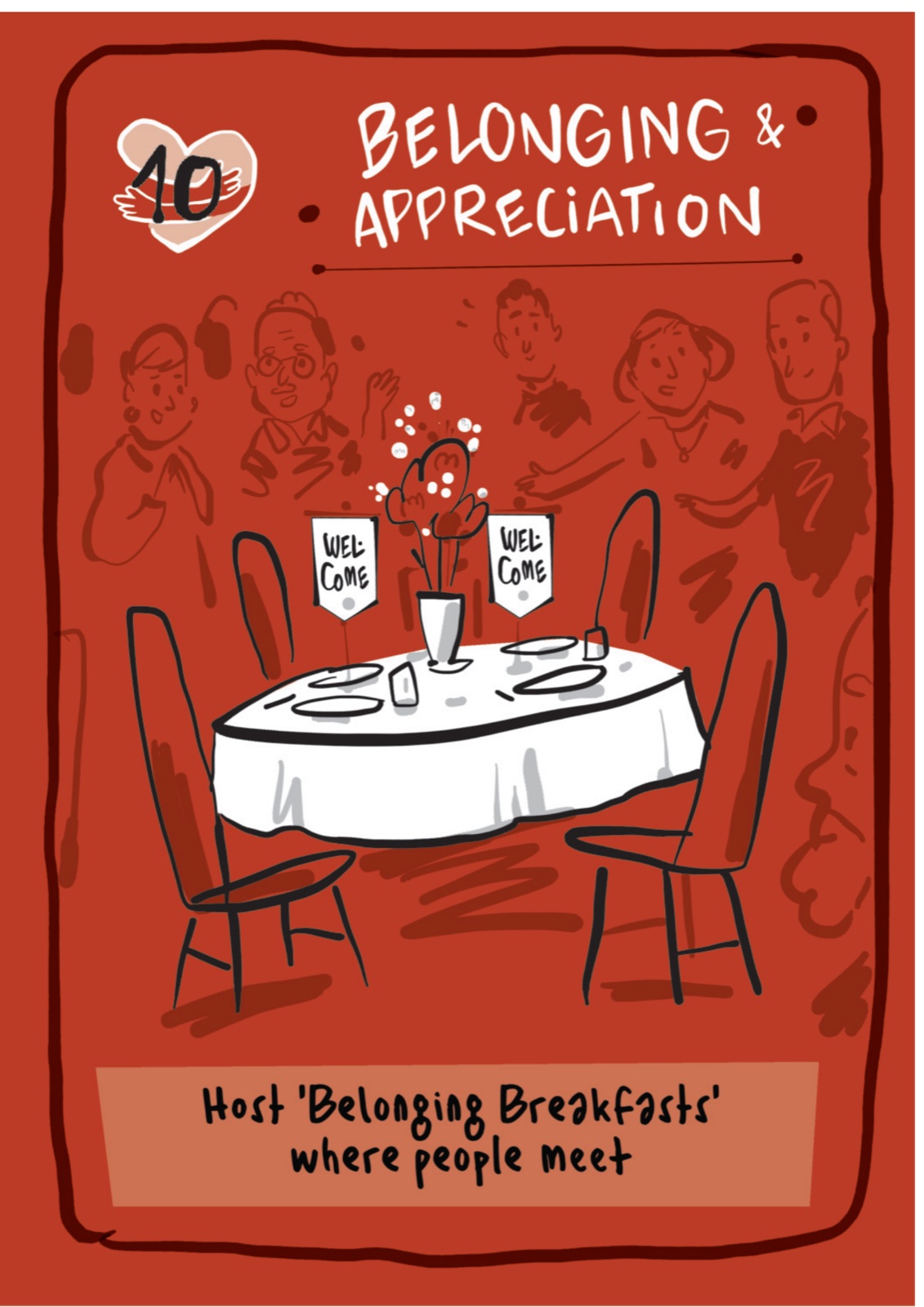
- Host “Belonging Breakfasts” where people from different teams actually meet.
Notice the pattern: every 10 requires someone to hold the space. Facilitating, moderating, hosting — these aren’t passive invitations anymore. They demand presence, skill, and intention. That’s what makes the 10 the bridge between individual cards (7–9) and the team dynamics that follow (Jack–King). This is where Edmondson’s concept of “leader inclusiveness” becomes practical: someone actively drawing out voices that would otherwise stay silent — not through authority, but through design. And it connects to Clark’s idea that safety isn’t just felt; it’s practiced in the quality of conversation a team is willing to have.
With the 10s, we close the individual chapter of the card game.
The Jacks
From individual action to team rhythm. The Jack represents Group Momentum — a group-level impulse that sustains psychological safety across multiple interactions. This is no longer about what you do; it’s about what the team keeps alive together.
The shift from 10 to Jack? A 10 says “Let’s actually talk about it.” A Jack says “This is how we do things around here.”
- Anchor regular open feedback rounds that outlast any single facilitator.
- Award a playful “Mistake of the Month” trophy — celebrating learning, not failure.
- Start weekly “Trust Check-ins” with simple rating scales.
- Build a Team Charter for collaborative decisions.
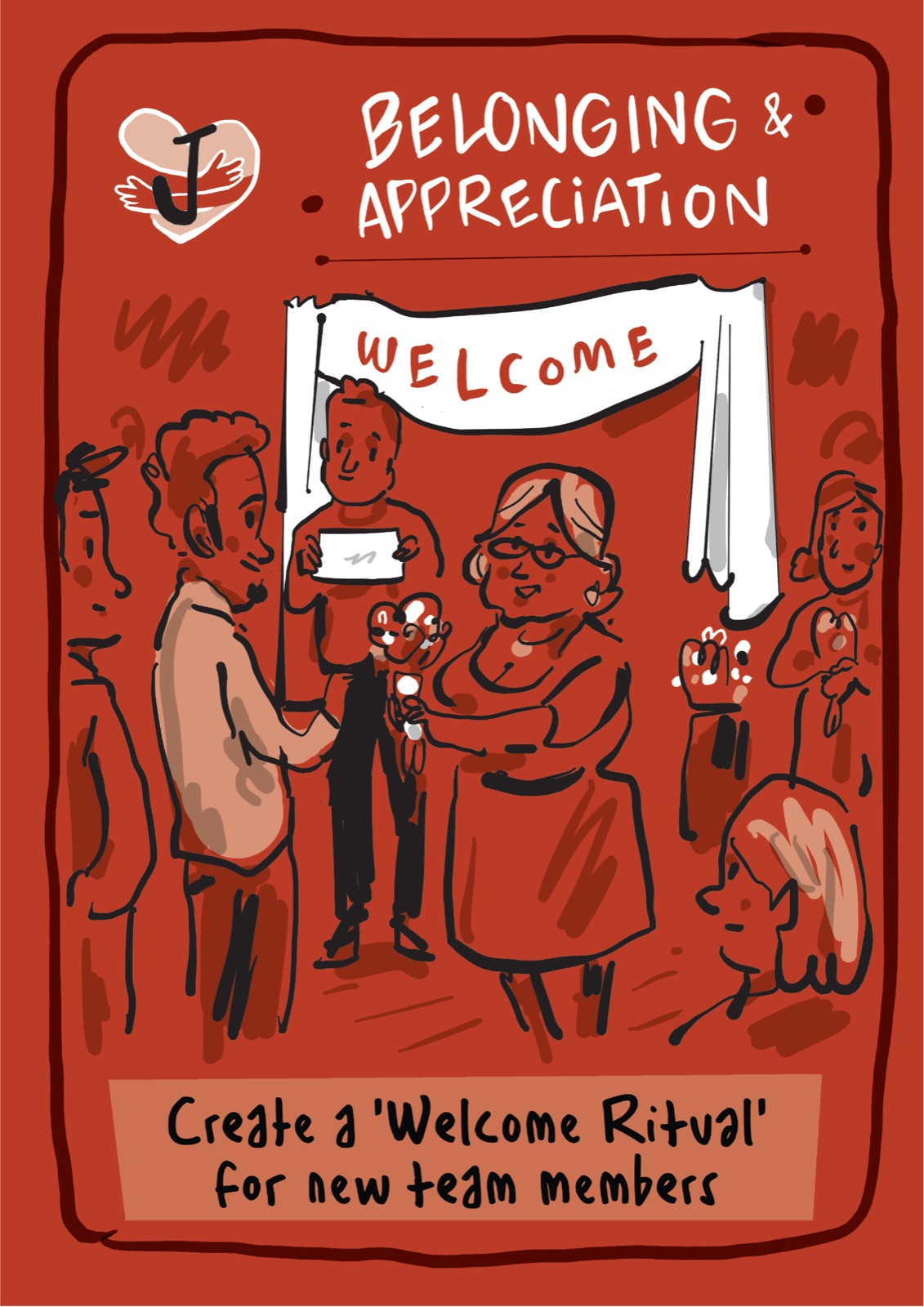
- Create a “Welcome Ritual” for new team members.
Here’s what makes the Jack fundamentally different: nobody owns it. Everybody carries it. A trophy only works if the team nominates. Feedback rounds only survive if people show up. Trust check-ins only matter if honesty is the norm, not the exception. The Jack is the moment where psychological safety stops depending on champions — and becomes collective muscle memory. In Edmondson’s terms, this is where psychological safety becomes a true group-level construct — no longer the sum of individual behaviors, but a shared property of the team itself. Clark would call this the point where safety norms become self-reinforcing: the group protects the culture it has built.
With the Jack, we’ve entered team territory. From here, the game continues into the Queens — where momentum turns into leadership responsibility — and on through the Kings to the Aces: embedded processes and culture.