Coaching & Sparring
Strategic sparring for senior executives
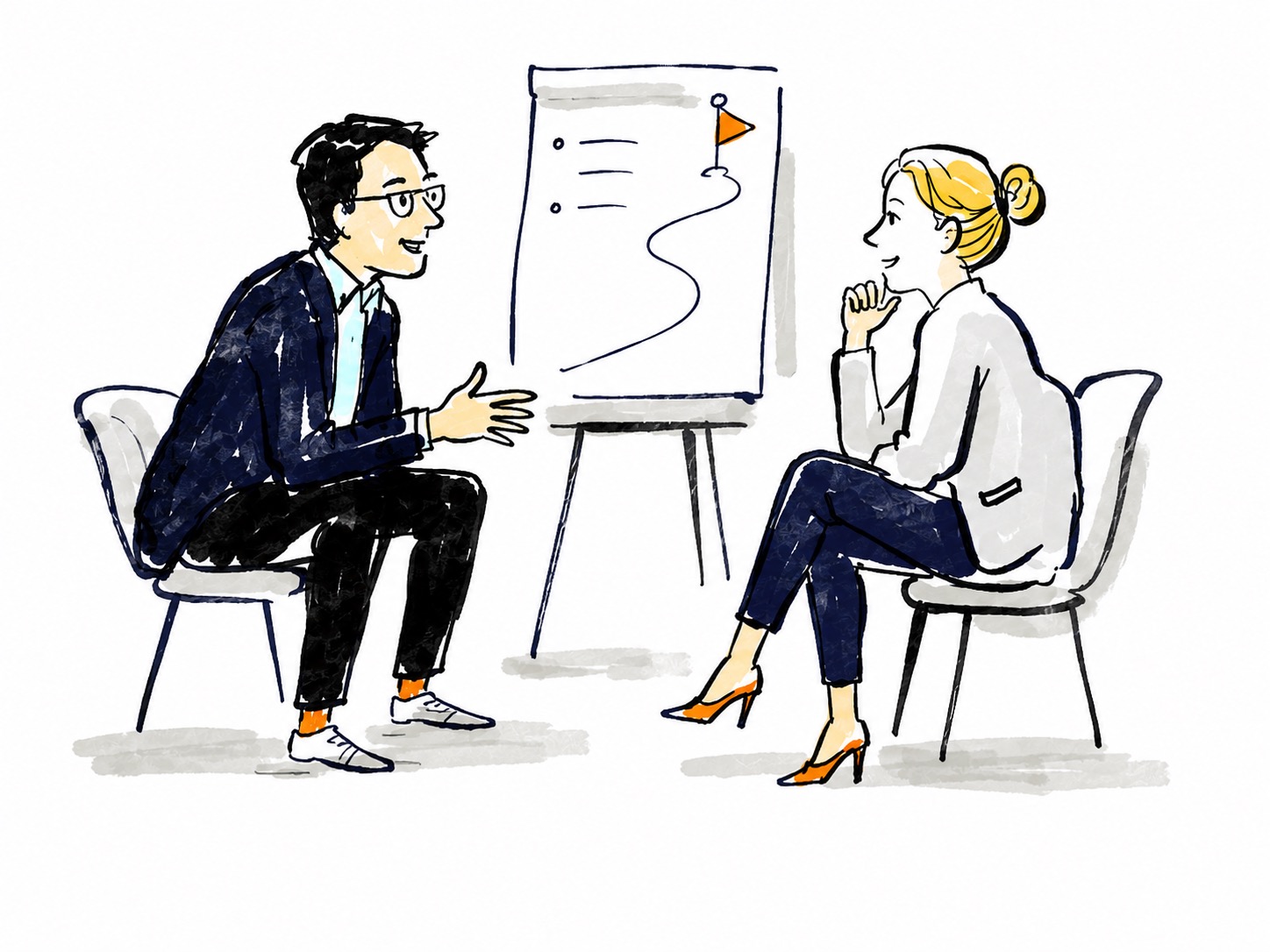
Strategic sparring. Some decisions and role transitions need a protected space for thinking — outside reporting lines and beyond well-meant advice. Our sparring offers exactly that: a confidential one-on-one thought partnership for leaders at the top. We work systemically and with attention to all perspectives, using hypnosystemic questioning, resources from lived experience, and a clear sequence: identity first, then architecture, then agreements. Designed as a series and linked to important milestones, it creates pragmatic routines instead of large programs. Sparring can stand on its own or become part of a broader change process: assessment, sparring, offsite, follow-through.
Sparring is a confidential one-on-one thinking partnership for leaders in key roles — usually the person with overall responsibility for a unit (executive management, divisional leadership, board, senior leadership level). It is a place where the leader can think out loud, test hypotheses, sharpen their role, and develop concrete steering moves for everyday practice.
Positioning — what defines sparring:
- It is thought partnership around strategic questions; the answers are developed with the leader from inside the concrete context.
- It is tailored to the situation; the way of working follows what the situation requires.
- The focus is the leadership role and its impact in the system.
- It creates a protected space of trust; what is discussed in sparring stays there.
Sparring is systemic and multiperspectival: the focus is the interaction between leader, team, and organization — and how the leader can become more effective within that system.
When sparring fits
- Role transitions or a changed leadership style that needs to become more recognizable and usable for the surrounding system.
- Transformation and pressure situations in which clarity, consistency, and stance at the top are decisive.
- High-stakes decisions about people, structure, or positioning that benefit from a protected thinking space.
- Preparation and debriefing of important leadership and team moments (offsites, reviews, town halls).
- Support over a stretch of change when the top leader needs a continuous outside thinking partner.
What the client gains
- a sharpened leadership role that connects better with the leader’s context
- concrete communication, behavioral, and steering moves: pragmatic routines that can be used immediately
- a condensed picture of the situation — patterns and fields of tension — as a basis for the next leadership and team steps, focused on patterns rather than individual evaluation
- key meetings prepared and debriefed (offsites, reviews) with a clear design
- continuity and commitment across the stretch of change: a topic overview, follow-through on activities, and fixed review anchors
Sparring also appears as a component in other service areas — in team and leadership-team development and in change & transformation.