How Teams Really Get Better: Psychological Safety + High Standards
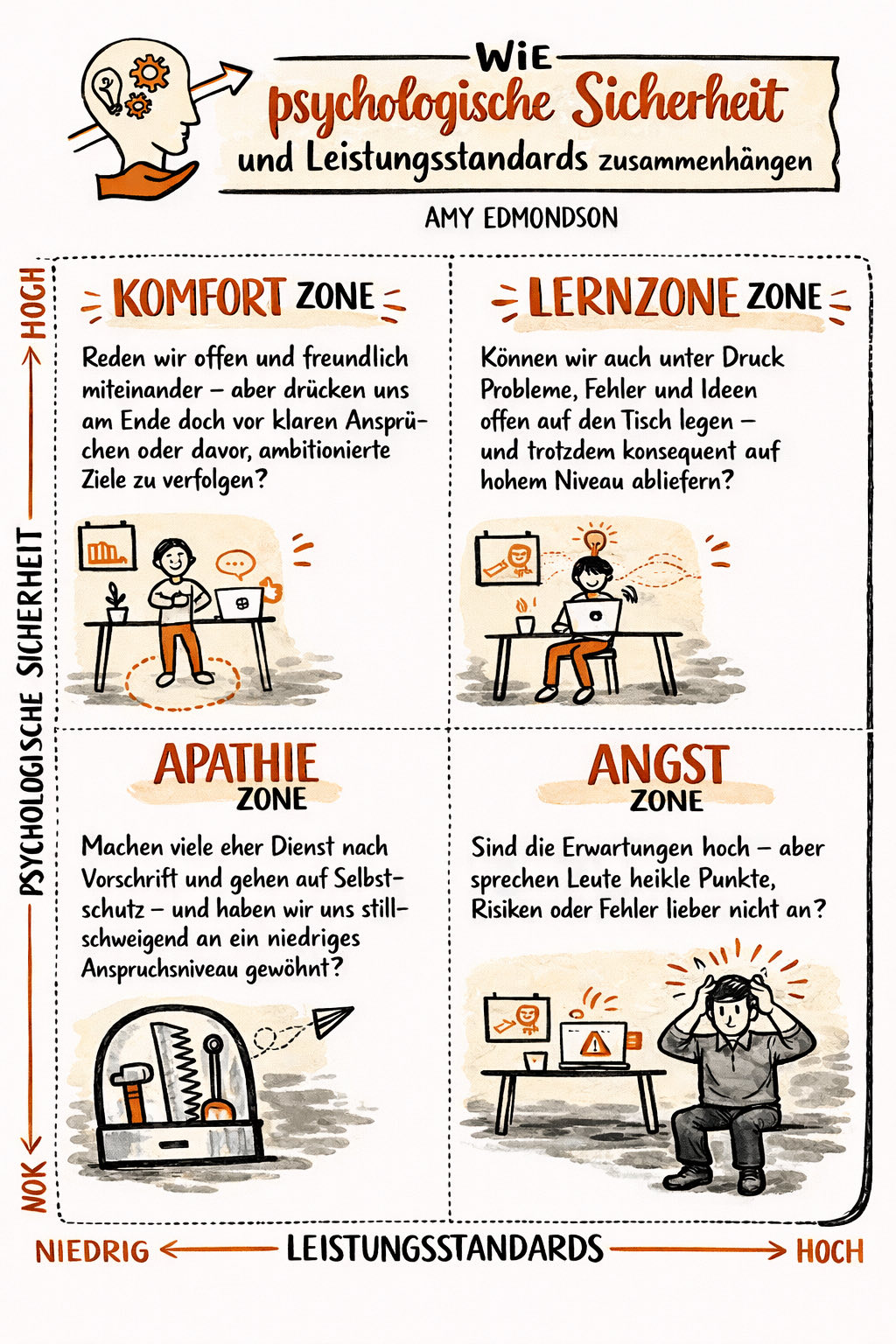
Psychological safety isn’t about being soft. It’s also not the opposite of performance. Think of two controls: safety and standards. When both are high, teams don’t just feel better—they work better. (HBR, May–June 2025)
We’ve all been in meetings where smart people stay quiet. In fast, knowledge-heavy work, this silence is expensive. The fix isn’t less pressure or more comfort. It’s tough goals + safe discussion at the same time.
What psychological safety is not
- Not “be nice all the time”—good debate can be uncomfortable (stay respectful, stay on the work)
- Not “I always get my way”—it’s “I’m heard and we use clear rules to decide”
- Not a rival to performance—safety and standards are two levers
The two parts
- Psychological Safety = speak up without fear
- Performance Standards = clear + high goals
Combinations
- Low/Low → Nobody cares: minimum effort, low energy
- High Safety + Low Standards → Too comfortable: pleasant, little progress
- Low Safety + High Standards → Stress & fear: people play it safe, fewer new ideas
- High/High → Real learning (target): people help each other, test ideas, ship good work
Source
Edmondson, A. C., & Kerrissey, M. J. (2025). What People Get Wrong About Psychological Safety. Harvard Business Review (May–June 2025).