The Power of Us
Part 2 of our series on tribalism in teams.
The uncomfortable message from Part 1: our tendency to think in terms of “us” and “them” cannot simply be switched off.
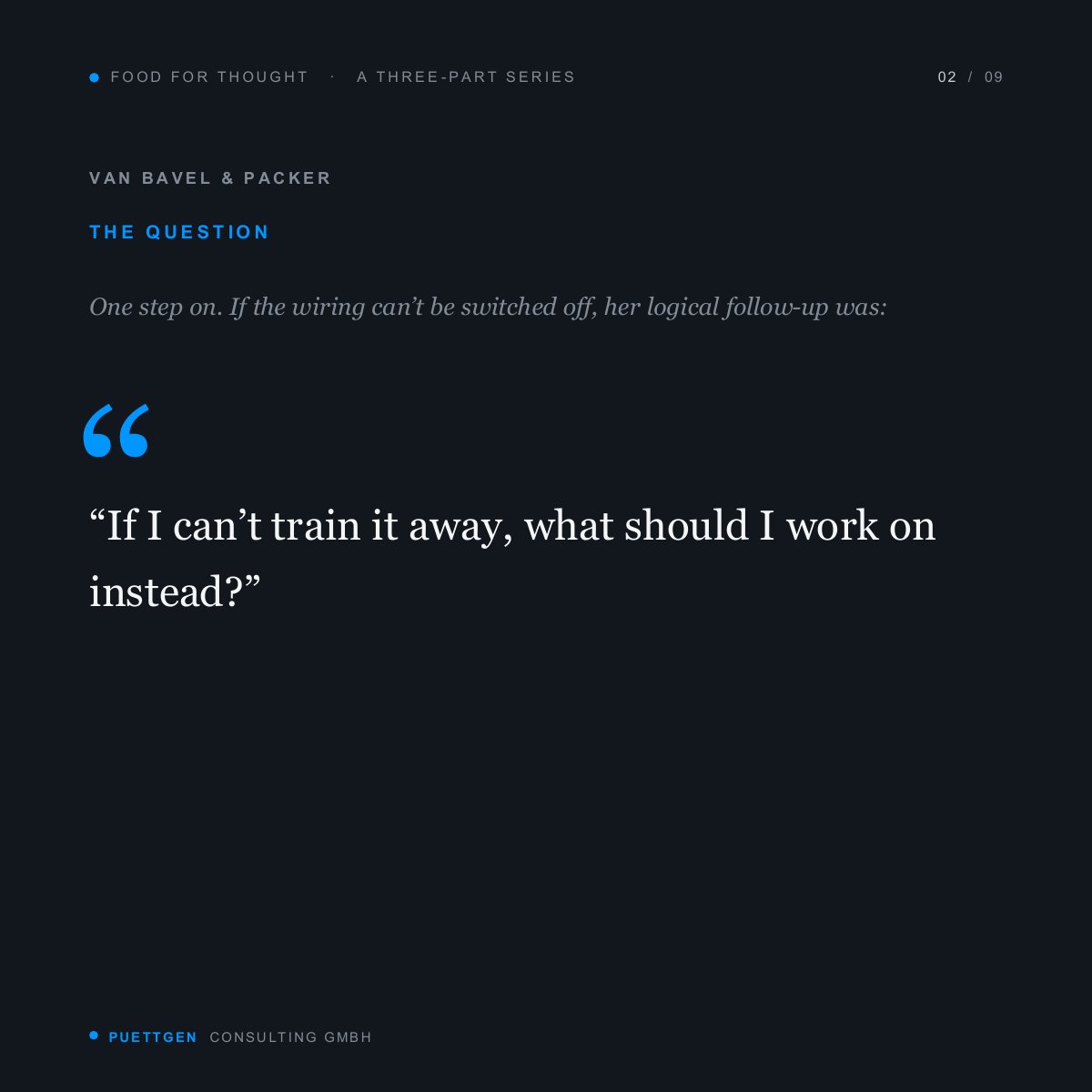
My client’s logical follow-up: “If I can’t train it away, what should I work on instead?”
Identity.
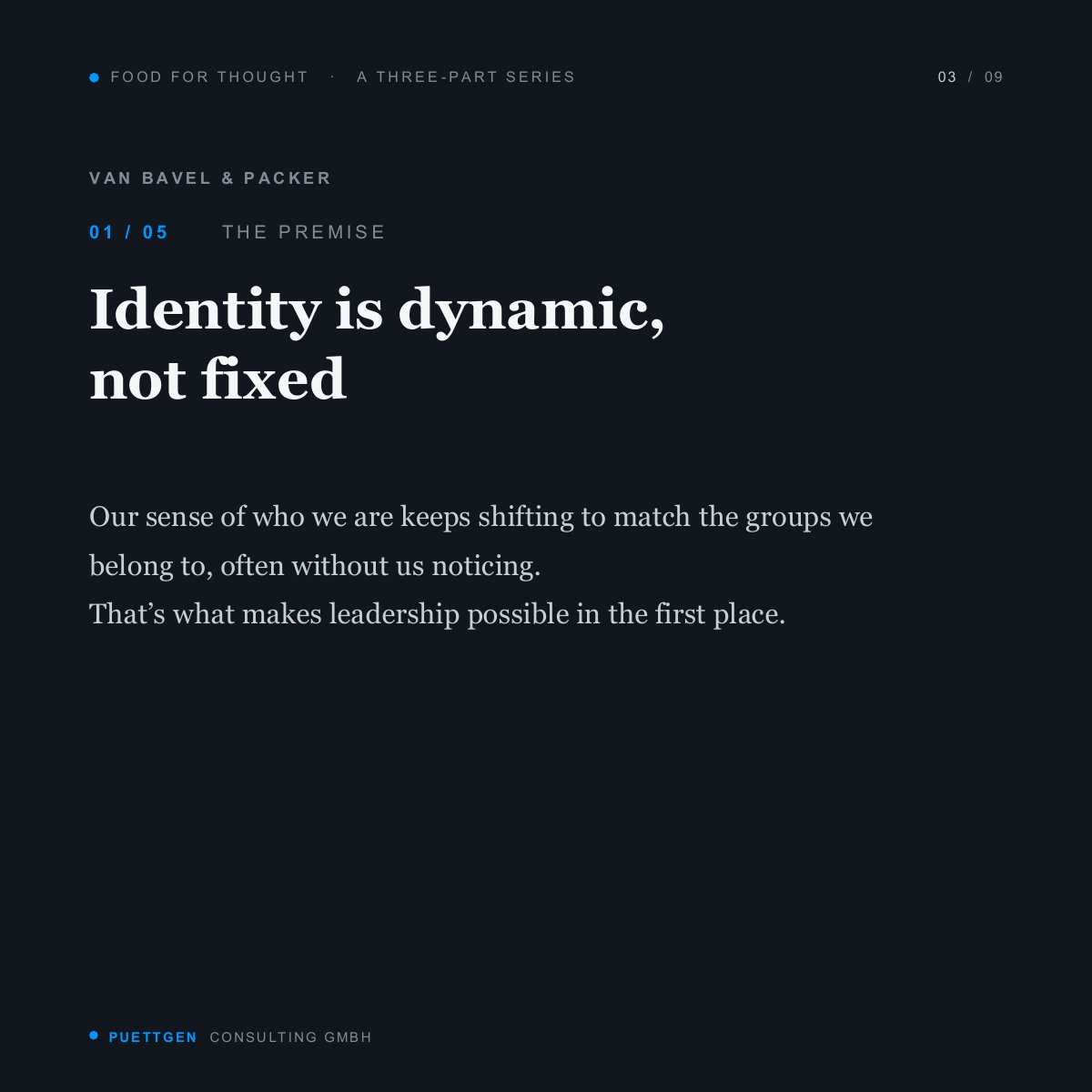
Because the boundaries of whom we include in “we” are surprisingly fluid. And that is where the leverage lies.
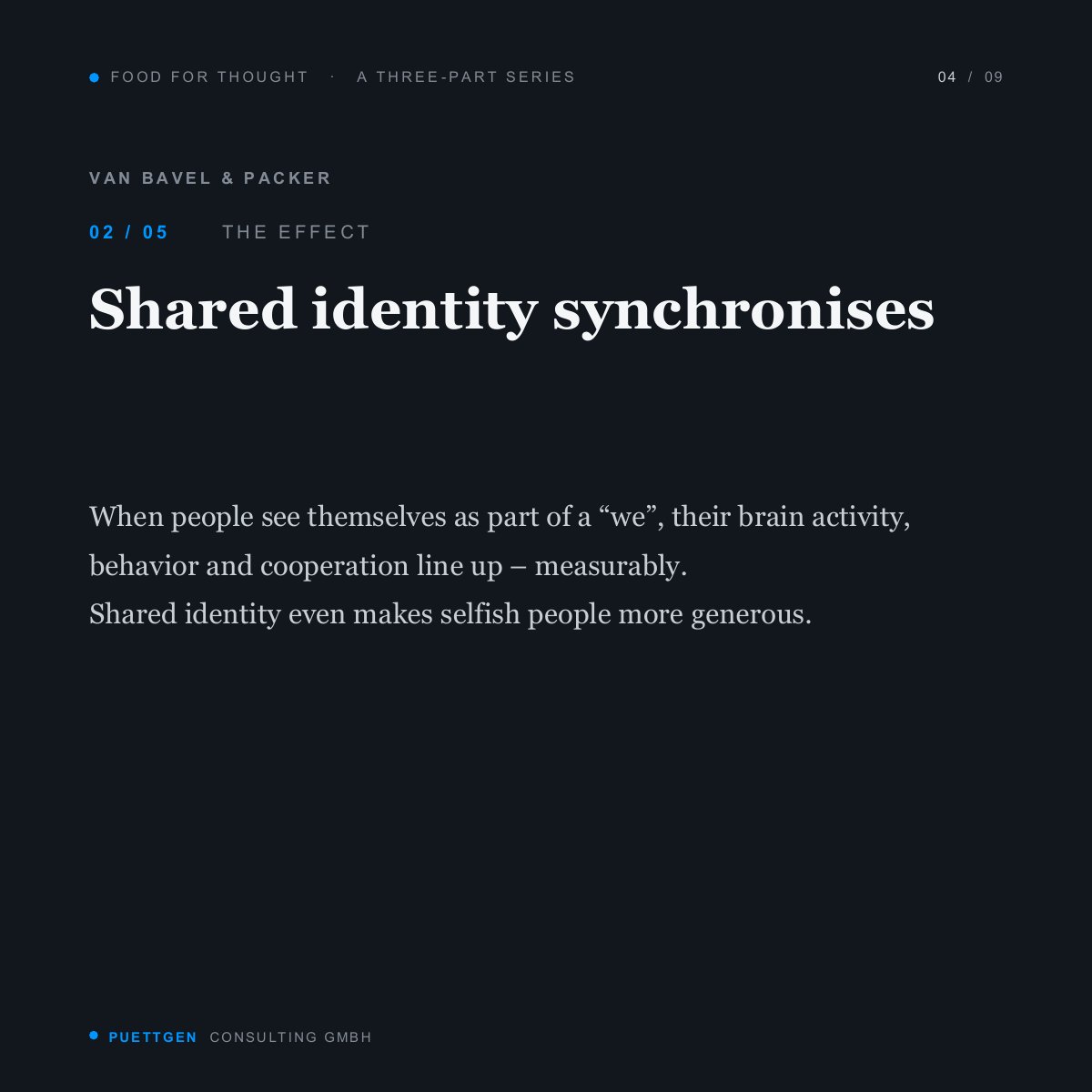
The small word “we” may be one of the most powerful tools a leader has. Shared identity can align how people perceive, decide, and act. And that effect can be measured.
Jay Van Bavel and Dominic Packer call this identity leadership.
The carousel distills the idea.
Once again, a little food for thought: Where have you seen a larger “we” accomplish more than even the strongest rational case?