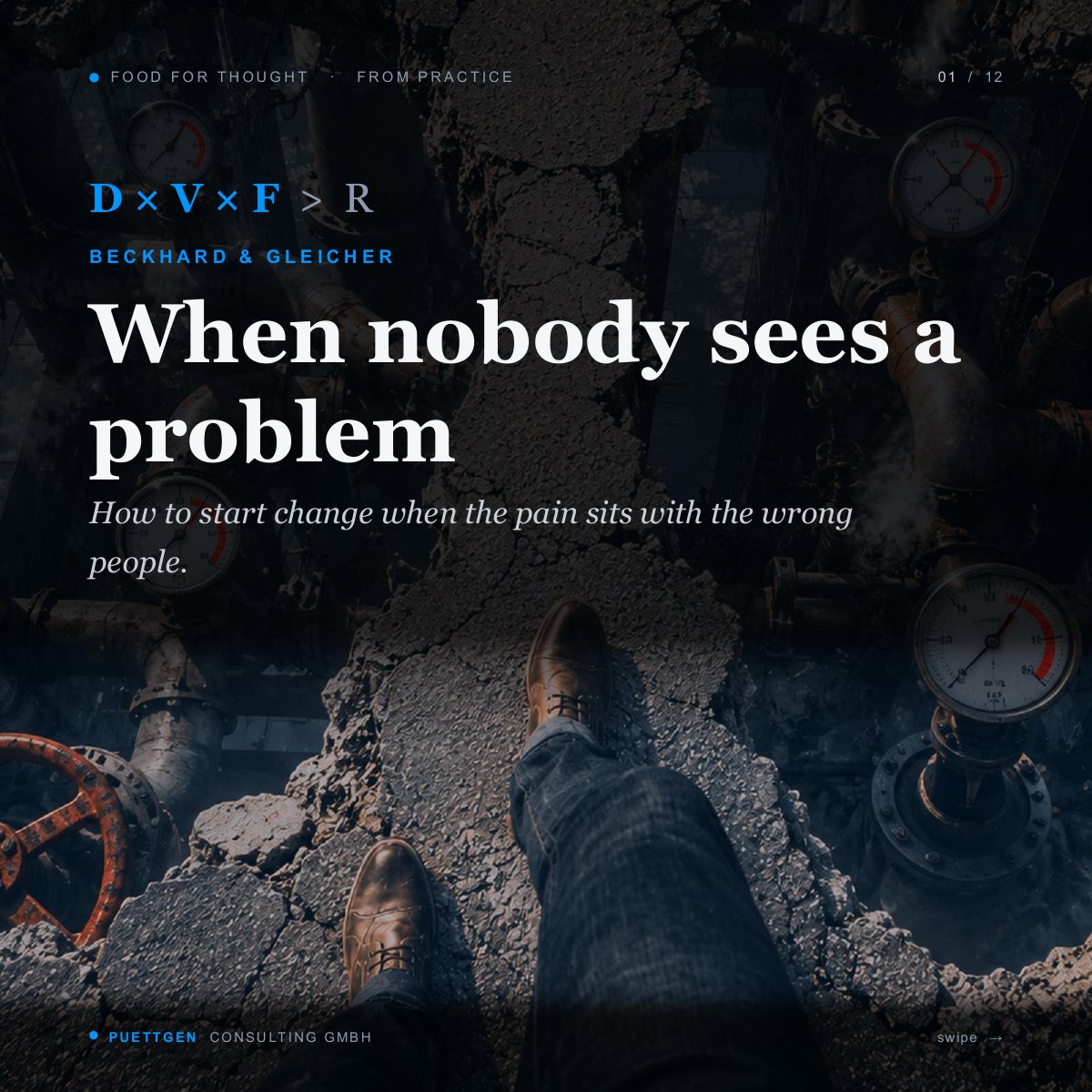
When Nobody Sees a Problem
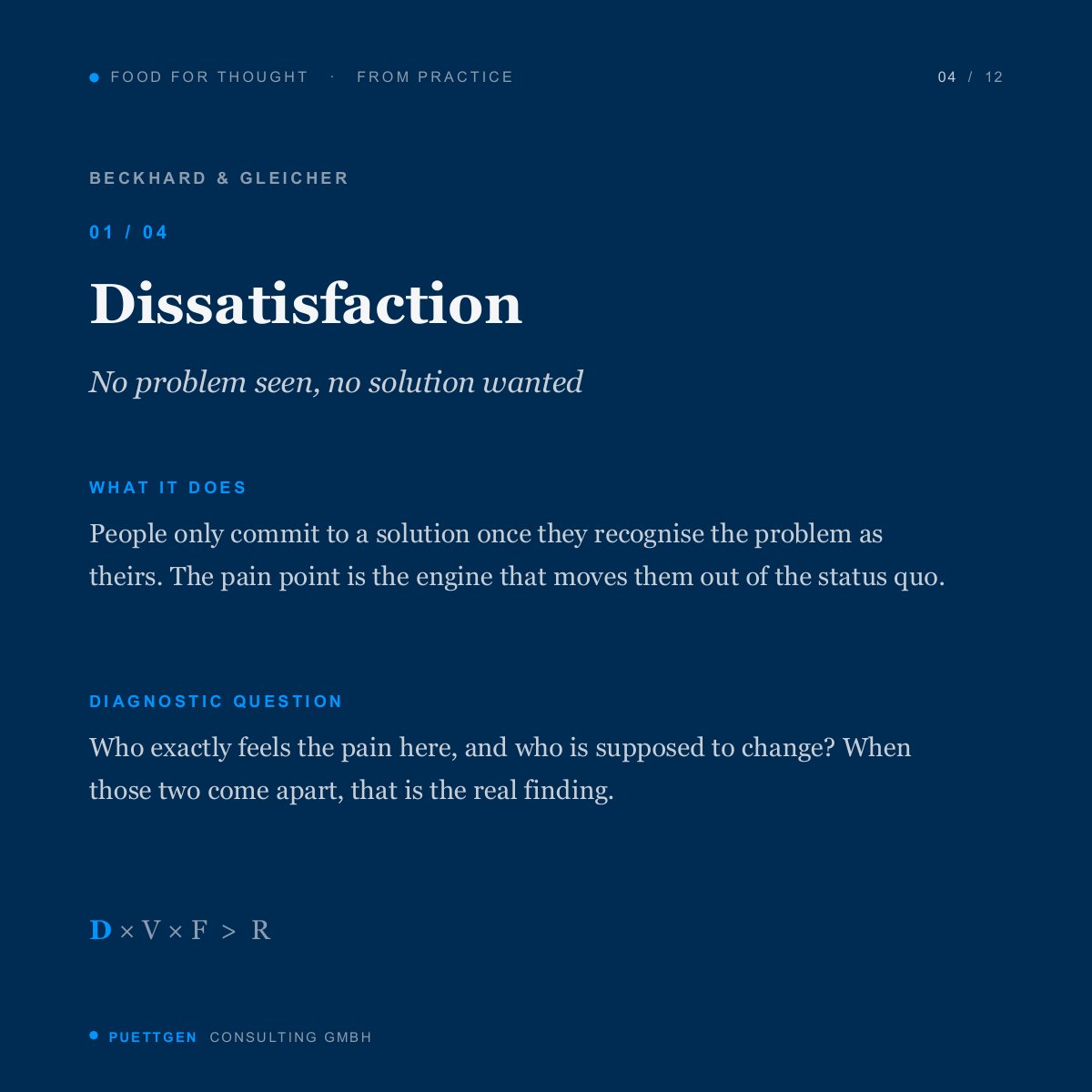
“My team sees no problem at all. I’m the only one who feels any pain here.”
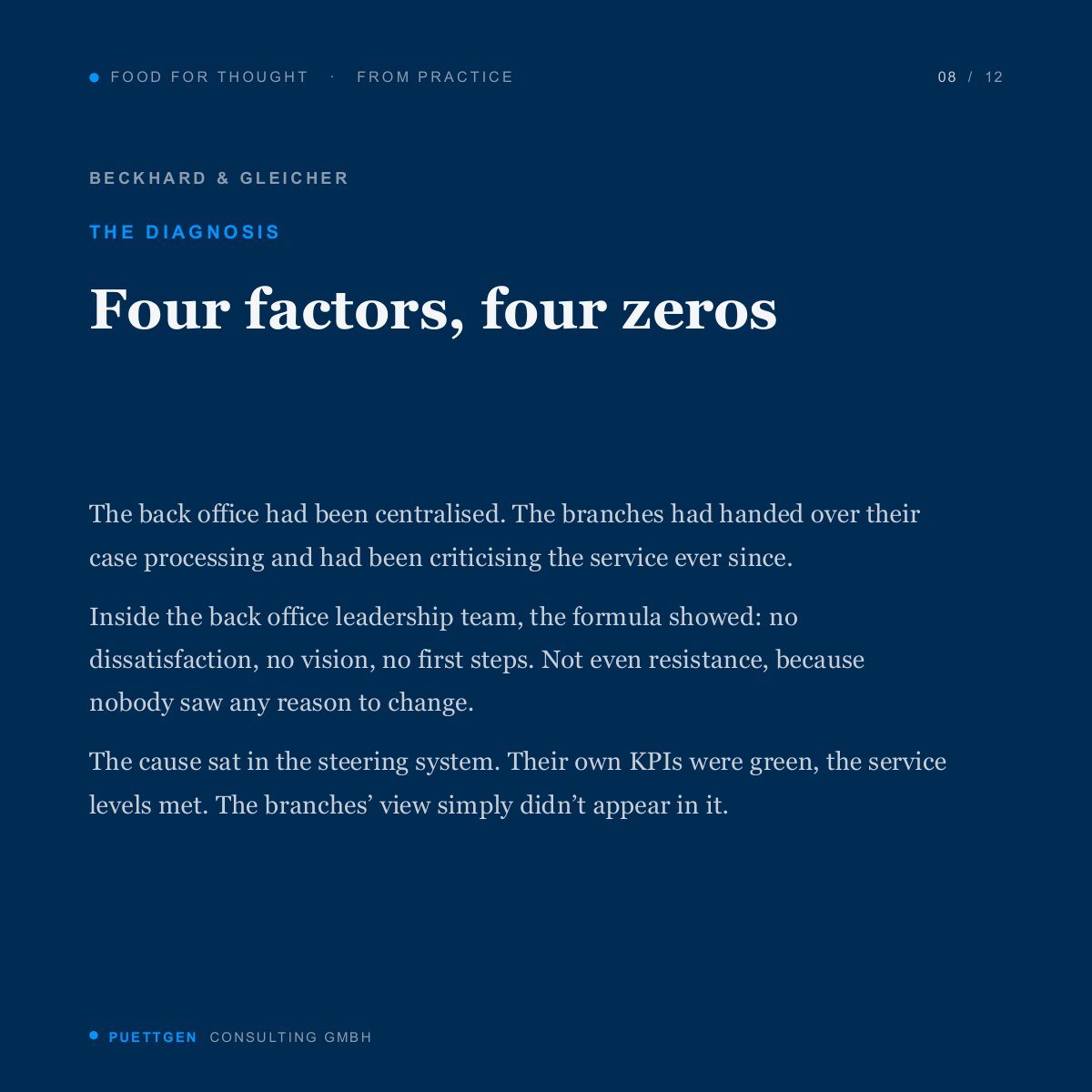
That was how a managing director described his starting position to me. He had just taken over the centralised back office of an insurer. The branches had handed their case processing over to it and had been criticising the service ever since. His mandate: improve things, and quickly.
The catch: his team considered themselves top performers. Their own KPIs were green, all service levels met, sometimes exceeded.
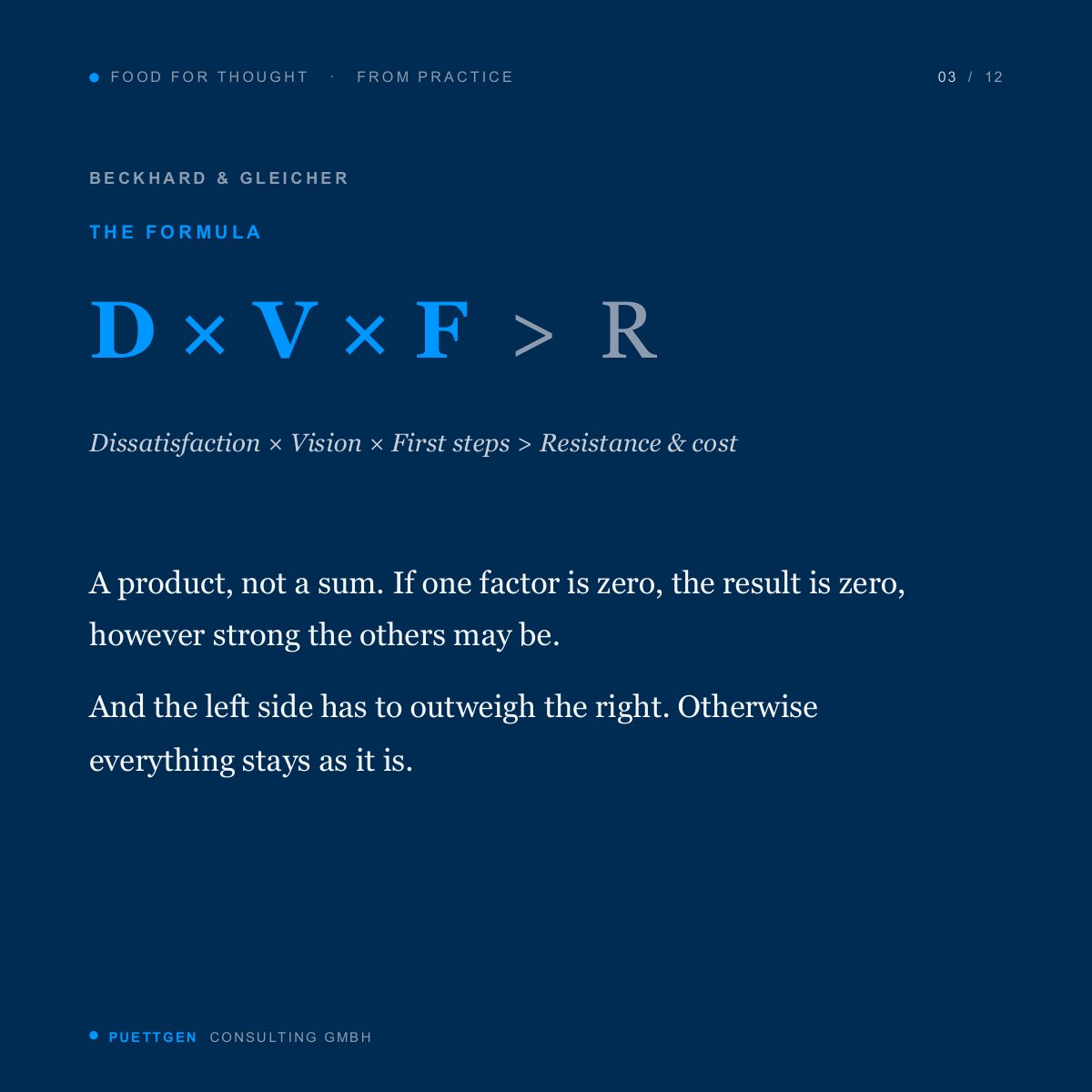
We used the change formula by Beckhard and Gleicher as a diagnostic:
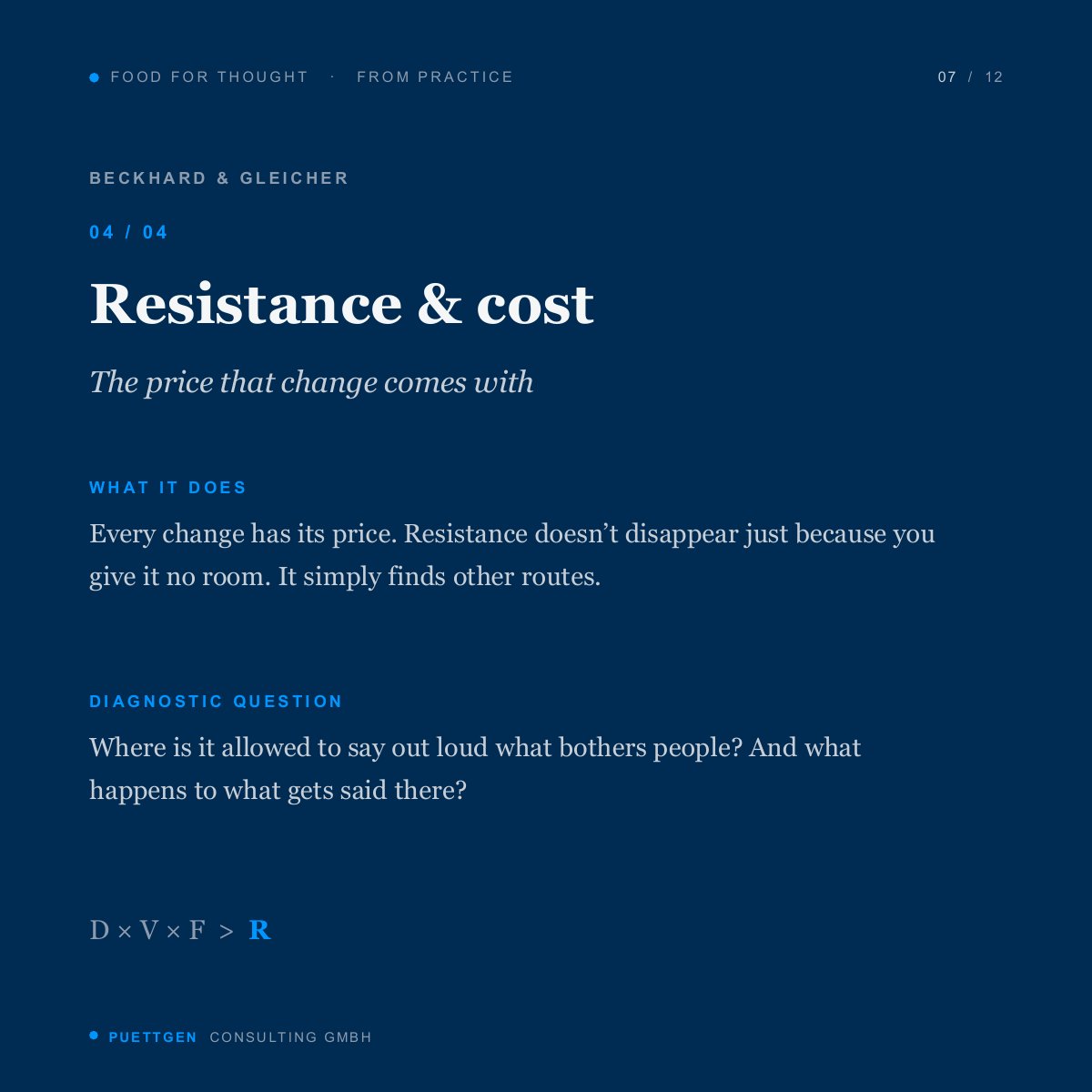
Dissatisfaction × Vision × First steps > Resistance
A product, not a sum. If one factor is zero, the result is zero. In that leadership team, almost everything was zero. There wasn’t even any resistance, because nobody saw a reason to change.
The cause sat in the steering system. The perspective of the branches, their internal customers, simply didn’t appear in it. A closed reference system.
So we brought the outside view into the room. Over 1,000 complaint emails, printed out, in stacks on the table at the leadership conference. And one of the most successful branch managers, who told them what poor service had actually cost.
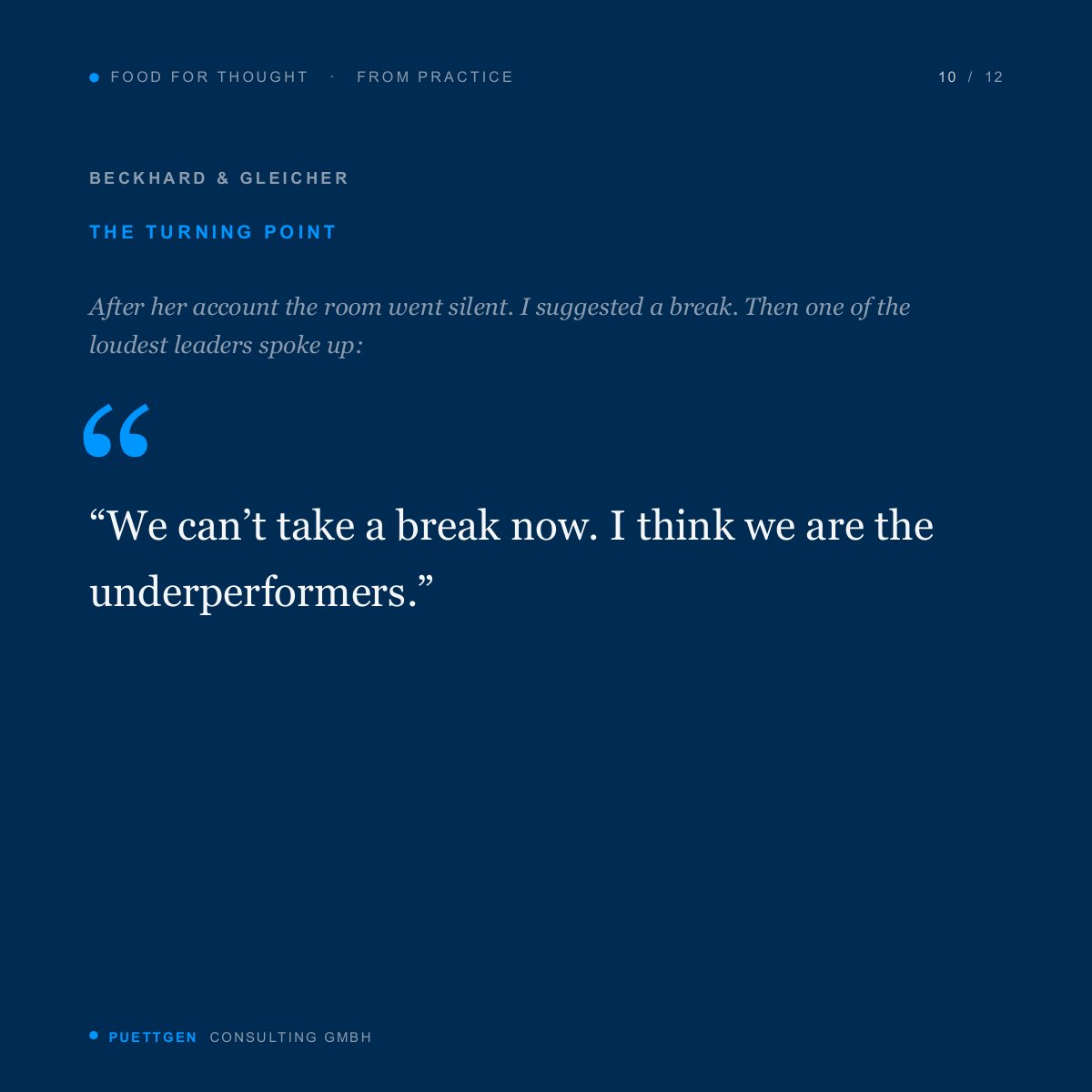
Afterwards the room went silent. Then one of the loudest leaders said: “I think we are the underperformers.” About as loaded as words get, and not only in his organisation.
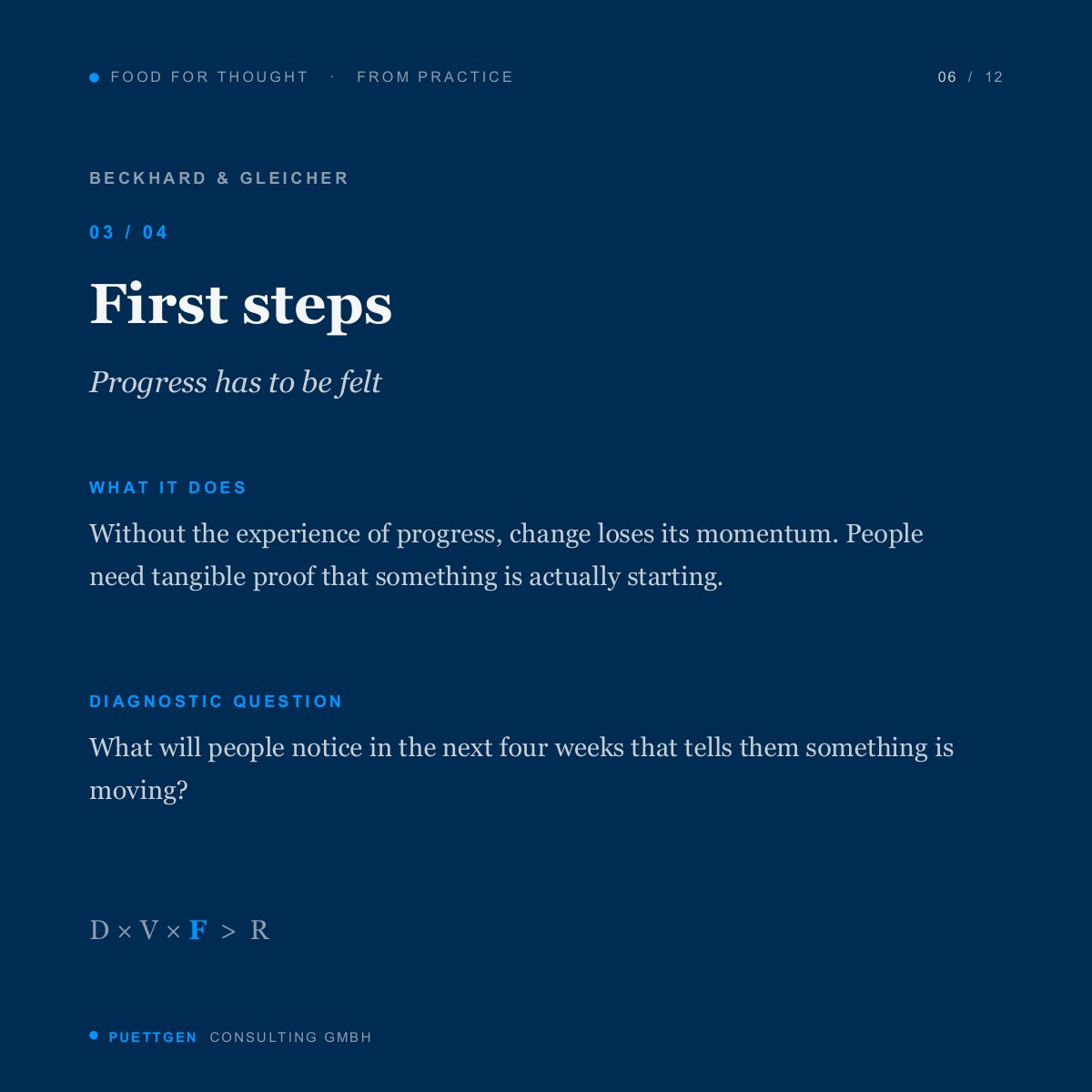
That was the turning point. On day two, a vision took shape.
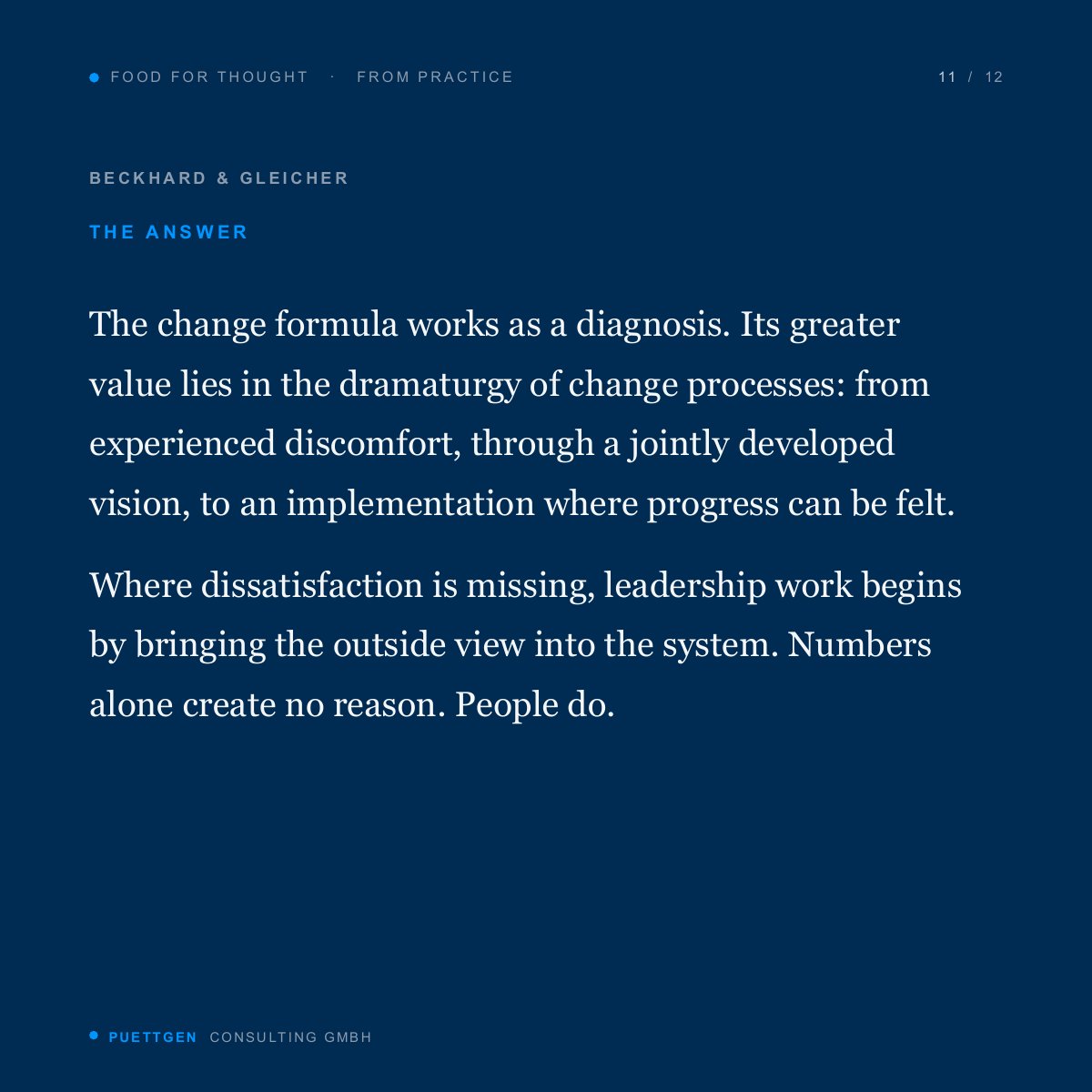
The carousel lays out the formula and how it can serve as a dramaturgy for an entire change process.
Food for thought: where in your organisation do you mainly measure what makes your own system look good?