Coaching & Sparring
Coaching for clarity and effective action
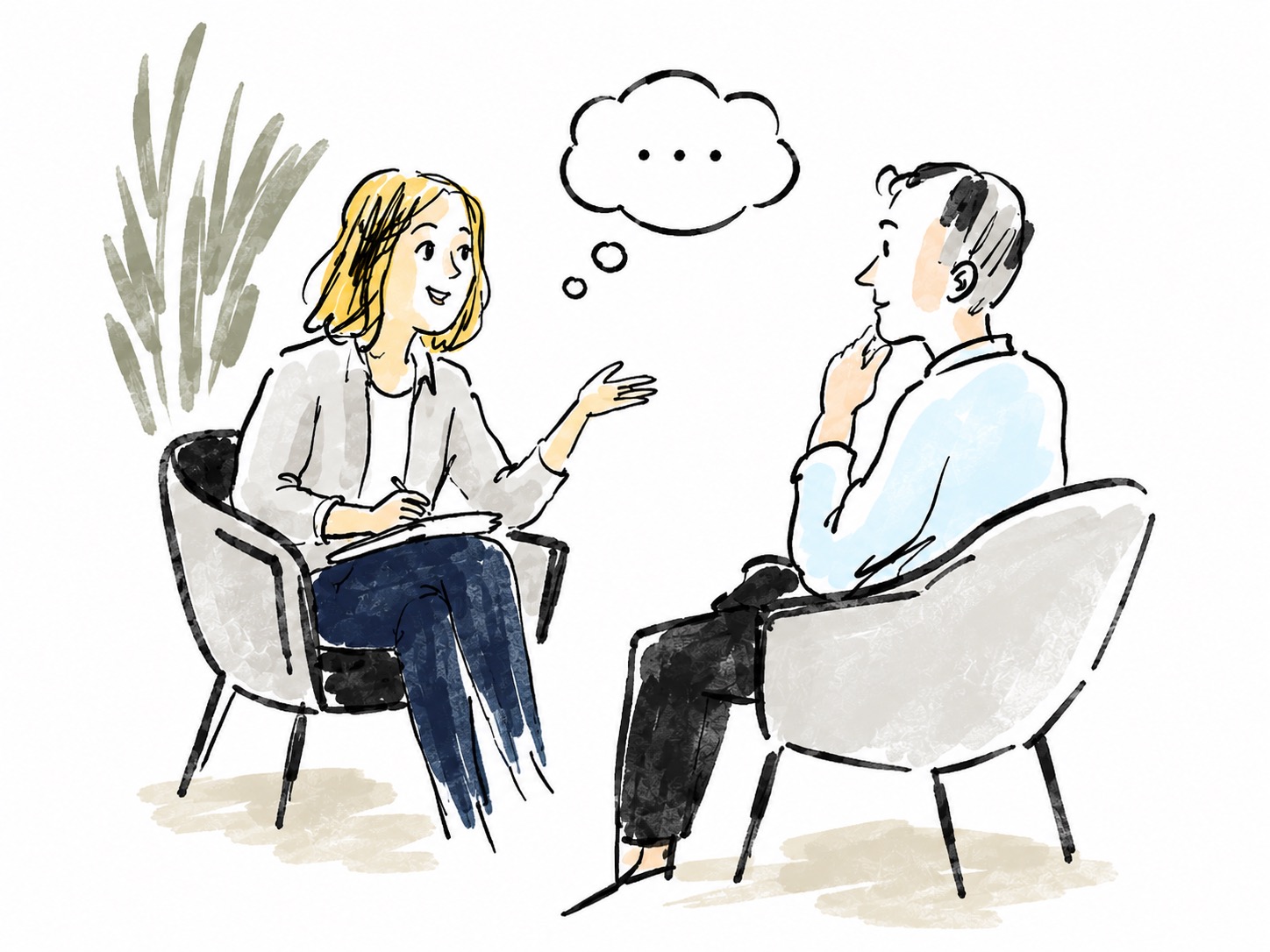
Coaching at PUETTGEN Consulting supports people who want to act effectively in demanding professional situations and develop their self-management. This includes people with leadership responsibility, project leads, HR professionals, experts, and people working through transitions, decisions, or change.
Our work starts with what already provides stability. We look at the capabilities, experience, and attempted solutions that are already present, and how they are playing out in the current situation. Often, the key lies in using an existing strength with more precision, adjusting its intensity, or understanding it differently in a new context.
We work systemically. This means looking at the person in relation to their role, mandate, relationship patterns, organizational dynamics, and unspoken expectations. In complex organizations, personal development benefits from a clear view of the surrounding reality. Coaching becomes a place where inner clarity and professional context can be examined together.
The aim is a more coherent and effective form of self-management in the person’s specific professional context.
How we work
Our coaching approach connects psychological depth with organizational reality. We are interested in what a person experiences, and also in the role, system, and expectations that shape that experience.
We work from a strengths-based perspective. This means looking for existing capabilities, experience, and inner points of orientation. Sometimes a strength shows up as a burden in the current context: a strong sense of responsibility turns into overload, thoroughness turns into restraint, a need for harmony turns into a lack of clarity. In coaching, the capability behind the pattern becomes accessible and manageable again.
We work precisely with language, images, and concrete situations. Important clues often appear in a single phrase, a spontaneous reaction, a recurring scene, or a small physical signal. From there, new choices become visible in how people relate to themselves, their role, and others involved.
The result is coaching that stays connected to practice: competent, human, and close to the reality of everyday work.
Typical reasons for coaching
- difficult conversations and leadership questions
- decision pressure and dealing with competing expectations
- visibility, conflict, over-responsibility
- unclear roles and role transitions
- phases of high change dynamics
- wanting to perceive more clearly, decide more deliberately, and act more effectively
What coachees gain
- clearer perception in complex situations
- more deliberate decisions and greater confidence in action
- role clarity and a more confident way of handling expectations
- existing capabilities that become more visible and easier to use with intention
- new choices in how they relate to themselves, their role, and others
- concrete next steps that can be tested and put to work in everyday practice